

Is Abdominal Etching Right for Men Seeking Six-Pack Abs?
Abdominal etching can help men achieve a more defined midsection when stubborn fat hides their natural abdominal muscles. At Dr. Miami Beach, our professional team offers specialized abdominal etching, also known as Spartan Abs®, to enhance existing muscle definition through targeted fat removal. This procedure is intended for body contouring, not weight loss, and is generally best suited for men near a stable, healthy weight with good skin elasticity. To discuss your options, please contact us or schedule an appointment online. We are conveniently located at 400 W. 41St Street, Suite #412, Miami Beach, FL 33140.
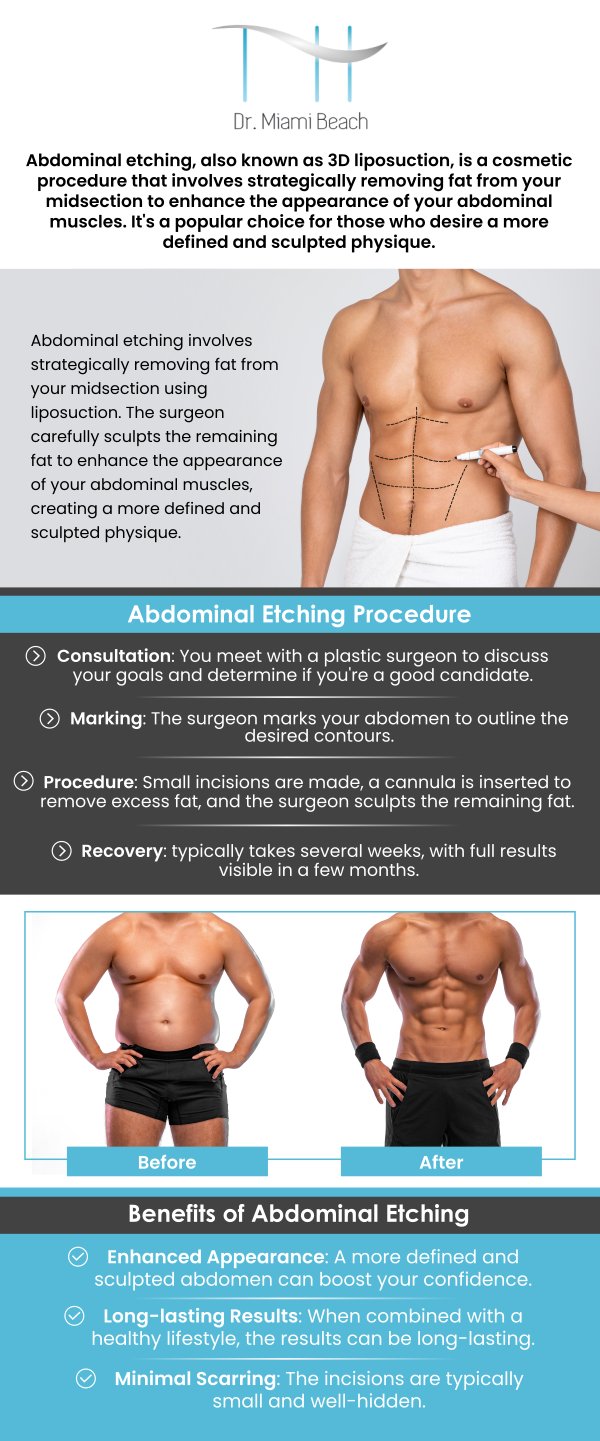
Table of Contents:
Can abdominal etching help men with stubborn belly fat get better definition?
How does abdominal etching enhance natural muscle lines in men?
Is abdominal etching effective for men who already exercise regularly?
What results can men expect from abdominal etching for six-pack abs?
Meet Dr. Tarik Husain, MD, FACS — Board-Certified Plastic Surgeon
Patient safety: Important precautions and possible risks of abdominal etching
What is the ideal body fat percentage for abdominal etching?
Will the six-pack look natural when I am not flexing?
Will there be visible scarring after abdominal etching?
When can men return to exercise after abdominal etching?
How long should compression garments be worn after abdominal etching?
Can abdominal etching cause uneven abdominal contours?
How can men maintain their results after abdominal etching?
Schedule an abdominal etching consultation in Miami Beach, FL
Yes. Abdominal etching can help some men improve muscle definition by removing localized subcutaneous fat, the fat located directly beneath the skin. Even with regular exercise, certain areas of abdominal fat may remain because of genetics, age, and individual fat distribution.
Dr. Tarik Husain, MD, FACS, uses targeted liposuction techniques to selectively reduce fat around the natural contours of the abdominal muscles. This approach can make existing muscle lines more noticeable and create a more sculpted abdominal appearance.
However, abdominal etching does not remove visceral fat, which surrounds internal organs, or strengthen abdominal muscles. Men with significant excess abdominal fat or loose skin may need a different approach. A consultation helps determine whether the procedure is appropriate.
Abdominal etching enhances muscle definition by selectively removing fat along the natural boundaries of the abdominal muscles. Instead of focusing primarily on reducing overall fat volume, the procedure emphasizes the contours of the rectus abdominis and surrounding abdominal structures.
Before treatment, Dr. Husain evaluates the patient’s abdominal shape, muscle development, skin elasticity, and fat distribution. These factors help guide the surgical plan.
During the procedure, fat is removed from selected areas using specialized liposuction instruments. The objective is to highlight existing muscle contours while maintaining balanced proportions. Abdominal etching does not involve creating new muscles or placing abdominal implants.
The final appearance depends on the patient’s anatomy, skin healing, and response to surgery. Although the procedure aims for natural-looking definition, some patients may experience visible contour irregularities or asymmetry.
Men who exercise regularly and maintain a stable weight may be suitable candidates for abdominal etching, particularly when localized fat continues to conceal their abdominal muscle definition.
Because the procedure enhances existing contours rather than developing muscle tissue, underlying muscle tone can influence the final appearance.
Potential candidates generally have:
• A relatively stable body weight.
• Localized abdominal fat that affects muscle visibility.
• Good skin elasticity and limited excess skin.
• Good overall health without uncontrolled medical conditions that significantly increase surgical risk.
• Realistic expectations about results and recovery.
• A willingness to maintain healthy habits after surgery.
There is no single BMI or body fat percentage that determines whether every man qualifies. Dr. Tarik Husain, MD, FACS, can assess individual anatomy, health history, and treatment goals before recommending abdominal etching.
Abdominal etching may produce a more defined, athletic-looking midsection by making existing abdominal muscle contours more visible. However, the amount of definition varies, and a perfectly symmetrical six-pack cannot be guaranteed.
Swelling, bruising, and temporary firmness are common during the initial recovery period. As swelling gradually decreases, the treated area’s contours generally become more noticeable. Final results may take several months to develop.
The fat cells removed during liposuction are generally permanently removed, but remaining fat cells can enlarge if body weight increases. Natural aging and changes in skin elasticity may also affect the appearance over time.
Maintaining a relatively stable weight, eating a balanced diet, and exercising after medical clearance may help preserve long-term results.
Dr. Tarik Husain, MD, FACS, is a board-certified plastic and orthopedic surgeon at Dr. Miami Beach in Miami Beach, FL. His medical background includes additional subspecialty certifications in sports medicine and hand surgery, providing a broad foundation in human anatomy and musculoskeletal structure.
Dr. Husain completed orthopedic surgery residency training in Hawaii and served as an Army orthopedic and sports medicine surgeon. He subsequently completed plastic surgery residency training at the University of Miami, followed by additional subspecialty training at the University of Texas Southwestern Medical Center.
His professional work includes male aesthetic procedures, particularly body contouring and abdominal etching. His Spartan Abs® technique is designed to enhance existing abdominal contours while considering each patient’s natural anatomy and body proportions.
At Dr. Miami Beach, patients can consult with Dr. Husain to discuss their aesthetic goals, surgical options, potential risks, and realistic expectations before deciding whether abdominal etching is appropriate.
Abdominal etching is an elective surgical procedure and requires careful consideration of potential benefits, limitations, and complications.
Before surgery, Dr. Tarik Husain, MD, FACS, evaluates relevant medical information to help determine whether a patient is an appropriate candidate. Patients should disclose their medical conditions, previous surgeries, medications, supplements, tobacco or nicotine use, and history of blood clots or anesthesia complications.
Important safety considerations include:
• Surgical screening: Existing medical conditions and factors that may affect healing or anesthesia safety should be assessed before treatment.
• Bleeding and infection: As with other surgical procedures, abdominal etching carries risks of bleeding, infection, and delayed wound healing.
• Fluid accumulation: Some patients may develop seromas, or pockets of fluid beneath the skin.
• Contour irregularities: Uneven fat removal, asymmetry, loose skin, or unexpected grooves may affect the final appearance.
• Changes in sensation: Temporary numbness or altered skin sensation can occur. Occasionally, these changes persist.
Blood clots and anesthesia complications: Although less common, serious complications such as deep vein thrombosis, pulmonary embolism, and anesthesia-related problems are possible.
• Postoperative care: Patients should follow individualized instructions about incision care, compression garments, medications, physical activity, and follow-up appointments.
When to seek emergency medical care: Chest pain, sudden shortness of breath, fainting, or coughing up blood after surgery requires immediate emergency evaluation. New one-sided leg swelling or pain also needs urgent assessment because it may indicate a blood clot.
Fever, worsening redness, unusual drainage, or increasing pain around the treatment area should be reported promptly to the treating medical professional.
Understanding these risks and following postoperative instructions are important parts of making an informed treatment decision.
There is no universally established body fat percentage required for abdominal etching. Men with relatively low levels of subcutaneous abdominal fat, existing muscle development, and good skin elasticity may achieve more noticeable definition. Dr. Tarik Husain, MD, FACS, evaluates each patient’s physical characteristics, health, and expectations rather than relying on a single percentage.
Abdominal etching aims to enhance natural muscle contours so the abdomen appears defined without requiring the muscles to be flexed. However, results vary based on anatomy, skin elasticity, and healing. Some patients may experience asymmetry or more prominent grooves than expected. A natural appearance cannot be guaranteed.
Abdominal etching requires small incisions that can leave scars. Incisions may be positioned in less noticeable areas, depending on the surgical technique and individual anatomy. Scars often become less prominent over time, but they do not disappear completely. Healing patterns and skin characteristics influence their final appearance.
Light walking may be recommended early in recovery to promote circulation, depending on the patient’s condition. However, heavy lifting, intense abdominal exercises, and strenuous workouts usually need to be avoided for several weeks. Dr. Husain can provide individualized guidance on returning to physical activity based on healing progress.
Compression garments are commonly used after liposuction-based procedures to help manage postoperative swelling and support the healing tissues. The recommended duration depends on the surgical technique, extent of treatment, and individual recovery. Patients should follow Dr. Husain’s specific instructions regarding garment use and fit.
Yes. Abdominal etching can sometimes result in uneven contours, asymmetry, skin irregularities, or visible depressions. Some changes improve as swelling decreases, while others may persist. Factors such as skin elasticity, existing anatomy, and healing response influence the result. In certain cases, additional treatment may be considered.
Yes. Abdominal etching can sometimes result in uneven contours, asymmetry, skin irregularities, or visible depressions. Some changes improve as swelling decreases, while others may persist. Factors such as skin elasticity, existing anatomy, and healing response influence the result. In certain cases, additional treatment may be considered.
Men considering abdominal etching can schedule a consultation with Dr. Tarik Husain, MD, FACS, at Dr. Miami Beach. During the visit, patients can discuss their desired abdominal appearance, medical history, possible treatment options, and recovery expectations. For more information, please contact us. We are conveniently located at 400 W. 41St Street, Suite #412, Miami Beach, FL 33140. We serve patients from Miami Beach FL, Miami FL, Brickell FL, Bay Harbor Islands FL, Coral Gables FL, Sunny Isles FL, Key Biscayne FL, and the surrounding areas.
Check Out Our 5 Star Reviews

Additional Services You May Need
Additional Services You May Need
• Male Abs (Spartan Abs)
• BBL (Miami Butt Lift)
• Liposuction
• Mommy Makeover
• Jaw Tightening (Spartan Neck)
• Female Abs (Pilates Abs)™
• Facelift
• Wrinkle Relaxers
• Neurotoxins



 Send Text
 How May I Help You?


